Choose timezone
Your profile timezone:
Elettra Sincrotrone Trieste is honored to host the 12th "Diagnostics Experts of European Light Sources" (DEELS) workshop.
The goal of the workshop is to bring the diagnostics community together to discuss common problems, share new developments, and enhance synergies between different facilities.
There is no registration fee. Accomodation and transportation costs shall be covered for each participant by their home institute. We look forward to an enjoyable and productive exchange between all participants. As usual for DEELS, we are expecting that all institutes participating in the workshop contribute to the scientific program.
DEELS will be organized as a live 'in-person' event, and there will be no remote participation.
For those interested, Instrumentation Technologies' Libera Workshop will take place immediately after DEELS, taking advantage of the proximity of the locations and giving to the community the opportunity to attend both events. More information about the Libera Workshop can be found here.
Note: in order to register to the workshop and submit a contribution, you need to create an Indico account on Elettra Indico platform here.
Then, when asked for login, select Indico as authentication provider instead of VUO and use your credentials. Check this page for further instructions.
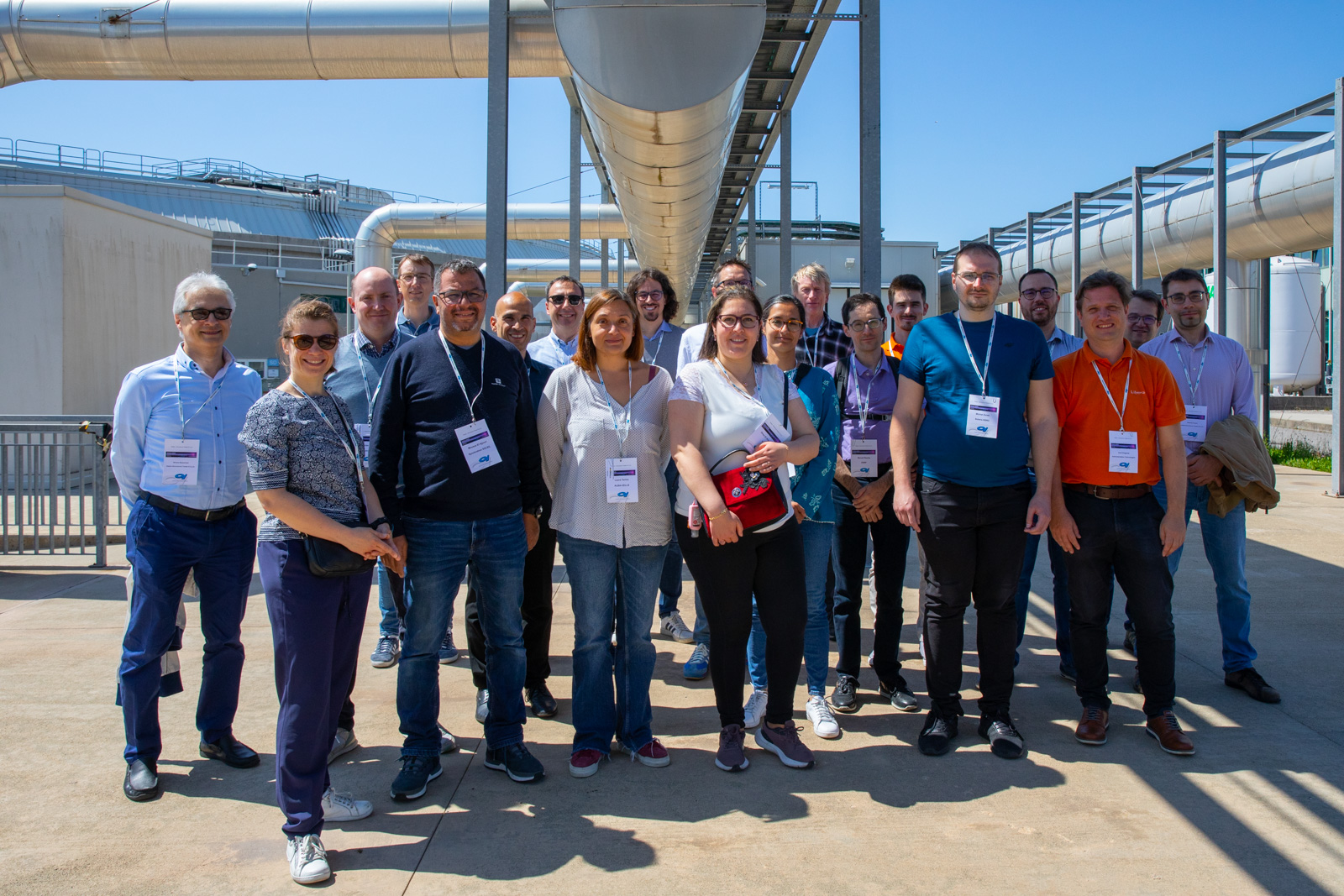
Welcome
The upcoming upgrade of the Elettra synchrotron to Elettra 2.0 demands a new generation of beam diagnostics capable of supporting its enhanced performance and stability requirements. In this context a novel Beam Loss Monitor (BLM) system has been developed integrating fast scintillating fiber detectors coupled to silicon photomultipliers (SiPMs) for precise and distributed loss detection along the storage ring. The system offers improved spatial resolution nanosecond scale time response and a compact non invasive design tailored to the ultra low emittance regime of Elettra 2.0. This presentation outlines the system architecture simulation benchmarks and preliminary experimental results highlighting the BLM’s capabilities in detecting fast loss events supporting machine protection and enabling advanced tuning of beam dynamics.
a) The injection efficiency measurement is crucial for both operation and optimization studies for the ESRF Storage Ring (SR). It is performed by using a set of BPM-buttons and associated BPM electronics, in both the Injector and the SR and this yield results at each injection shot (4Hz), with sub % precision and even for a very low injected current of 50uA on top of the stored 200mA. This system and examples of its results will be briefly presented.
b) Our injection efficiency is in a range of 60 to 70%, and despite many efforts over many years to improve this we are today still losing about 1/3 of the injected beam. Gaining a better understanding of these injected losses is therefore important and involves systems like the Beam Loss Detectors (128 units in the SR) that can provide information on the localization of these losses, and also on the time-resolved structure of them. This time-resolved aspect will be shown here, also in comparison with other techniques like BPMs and visible light detection.
Associated questions to the DEELS audience and perhaps for a discussion (?) :
Is a good, or at least reasonable, injection efficiency important for your light source, or is it not much a concern ?
How do you measure injection efficiency ? with what precision/resolution ? at what rate ?
Can you resolve the time-structure of it and can you localize these losses in your Storage Ring ?
We will show stability measurements of the electron beam together with vibration measurements of some elements of the storage ring of the ESRF (magnets and vacuum chambers). The effect of these mechanical vibrations on the stability of the beam will be discussed, and we will give some ideas on how to improve the stability of the beam.
The ARES (Accelerator Research Experiment at SINBAD) is a conventional S-band linear RF accelerator allowing the production of low charge ultra-short electron bunches within a range of currently 0.01 pC to 250 pC. The R&D accelerator also hosts various experiments. Different types of charge monitors are installed along the 45m long machine: A new Faraday Cup design had been simulated and realized. Two Beam Charge Transfomers (Toroids) are installed. Both, Faraday Cup and Toroids are calibrated independently with laboratory setups. At the end of the accelerator a Bergoz Turbo-ICT (in vaccum) and an in-air ICT are installed. This presentation will give an overview of the measured linearity and the deviations found at the Toroid measurement.
Silicon carbide (SiC) is a wide bandgap semiconductor material known for its excellent electrical, thermal, and mechanical properties. For these reasons, SiC detectors are increasingly being used as photon beam position monitors (pBPMs) in synchrotron radiation facilities, mainly replacing tungsten blades operating in photoemission mode.
We propose an innovative method using a matrix of intrinsic SiC photoconductive sensors (direct conversion of white beam), positioned immediately after the synchrotron source, each capable of separately detecting the light from the bending magnet and the insertion devices. Initial tests show sub-micron sensitivity and clear separation of beam contributions, offering a new way forward.
The presentation will be focused on real time diagnostic of the SOLARIS storage ring including on line ML analysis, stability forecasting and commissioning/measurement with the newly installed Bunch by Bunch feedback. In the second part of the talk recent failures of the ring subsystems and possible solutions will be discussed.
The scientific objective of the cSTART project (compact STorage ring for Accelerator Research and Technology) is the proof of concept for the injection and circulation of ultrashort electron bunches in a storage ring and the demonstration of novel laser-plasma accelerators (LPA) as injectors for storage rings. The cSTART project at KIT is in the phase of the FDR (final design report), and already most of the diagnostics system for operation have been ordered and a few were delivered.
Meanwhile, a prototype of the beam position monitor has been tested at KIT, either on a bench with a signal generator or with electron beams at the FLUTE photoinjector Linac. The aim of these tests is to assure the conformity of the readout units with the specifications required for the cSTART storage ring. In this presentation, we will describe briefly the cSTART project emphasizing on the specifications of the various diagnostics systems, and we will report on the different characterization tests which have been carried out providing perspective on the future plans and preparations.
In order to validate the electromagnetic design of beam position monitor (BPM) devices for fourth generation storage rings, three families of button type pick-up were developed based on vacuum sealing adhesive technology. The idea of gluing components for vacuum sealing purposes is not new in the accelerator field, although this approach seems to be mainly dedicated to solving vacuum leak issues, rather than being a possible solution for rapid prototyping of ultra-high vacuum feed-throughs at very low cost. This report describes some BPMs that have been designed, machined, assembled and tested under real working conditions, with the aim of "quick&dirty" evaluation of some button type pick-up samples in view of Elettra 2.0.
Within the ALBA II upgrade project, a novel button Beam Position Monitor (BPM) design has been prototyped. This contribution presents the characterization results obtained from button prototypes manufactured by two distinct companies, along with the derived conclusions. Furthermore, we also present the preliminary design of a new button intended for direct welding to a copper vacuum chamber.
Three different types of Beam Position Monitors will equip SOLEIL II storage ring. To ensure consistent signal levels across varying pipe diameters, two button sizes were selected: 6 mm diameter buttons for 16 mm beam pipes, and 7 mm diameter buttons for the 20 mm and 24 mm sections. Electromagnetic and thermal simulations have been conducted to validate the proposed designs. In parallel, prototypes have been tested on the existing machine to confirm the simulation results and validate the design. This presentation summarizes the simulation outcomes and the initial test results obtained from the current machine.
Reflective and reflectionless RF filters play important but different roles in radio frequency systems. Reflective filters, traditionally designed using lumped or distributed elements, reject out-of-band signals by reflecting them back towards the source, potentially causing standing waves and impedance mismatch. In contrast, reflectionless filters absorb out-of-band energy internally, providing matched impedance over a wide frequency range, and minimising signal reflections. Typically, reflective filters are used in analogue RF front-ends dedicated to BPMs.
What might be the effect of the reflected signal on the button and the beam itself? Could it be negligible or should it be taken into account, especially in new generation machines, where beam coupling impedance effects (wakefields) and transfer impedance mismatch are more of a concern compared to older storage rings?
Would it be possible to integrate a reflectionless behaviour directly in the pickup?
Our beam size monitor employs π-polarized visible light and Fresnel zone plates (FZPs). There was an intriguing discrepancy during early commissioning between the two techniques. Beam size measurements using visible light matched expectations, while those obtained with FZPs were significantly larger. Interestingly, the FZP-measured beam size gradually decreased with accumulated beam dose.
I would like to invite a discussion on whether this phenomenon has been encountered elsewhere and how it was interpreted or mitigated.
Three dedicated beamlines for accelerator diagnostics are under discussion for Elettra 2.0. Two of them will be dedicated to measuring the transverse dimensions of the beam, using the X-ray pinhole camera technique with bending magnets as the source. A third line could transport visible-near UV radiation to a streak camera for the analysis of the longitudinal profile of the beam.
In this presentation we provide a general description of the first beamline to be constructed (XDBL1), dedicated to the measurement of the beam size from a non-dispersive source and aimed at the measurement of the beam emittance.
In order to improve our transverse diagnostic tools, two new pinhole beamlines will be designed. The pinhole arrays will be in air for easier maintenance: this will result in a significant loss of X-Ray photons when passing through the vacuum window. To overcome this issue, the option to directly illuminate a CCD/CMOS camera with X-Ray radiation without prior conversion into visible light is under study. This report describes our findings regarding the current status regarding the use of X-Ray cameras as a "high flux" diagnostic tool.
For the Elettra 2.0 X-ray pinhole camera (XPC) on beamline XDBL1, we are aiming for pinholes as small as 10 microns. In literature, the technological details of pinhole design are not discussed in great detail. The aim of this discussion is to gather and share experience on the optimal choice of pinhole technology. Starting from the main design concept of a stack of tungsten plates with spacers, questions immediately arise:
What are the minimum requirements for the X-ray absorption of the pinholes? How does the scattering of X-rays in the pinholes affect the final measurement?
There are also a number of technological questions: is it necessary to use pure tungsten or would it be possible to use tungsten alloys or tungsten carbide? What is the experience with other materials such as molybdenum? What is the smarter and more reproducible technology for the spacers? Diamond Light Source colleagues have introduced gold lithographic pinholes. How do they compare with the main design concept?